LegalFab Knowledge Fabric
Version: 1.7
Last Updated: February 2026
Component Overview
The Knowledge Fabric serves as the foundational data integration and intelligence layer for the LegalFab platform. It implements a metadata-driven architecture that provides unified access to distributed data assets while leaving source data in place. The Knowledge Fabric is fundamentally an access enabler, not a data repository—it maintains mappings and relationships rather than duplicating data, ensuring a single source of truth while providing unified investigative capabilities.
Core Capabilities:
| Capability |
Description |
| Knowledge Graph |
Graph-native storage with entity resolution |
| Entity Resolution |
Cross-source entity matching and linking |
| Connectivity |
Direct DB/API connections, MCP connectors |
| Two-Way Data Flow |
Read from and write back to source systems |
| Discovery Service |
Automated identification and cataloging |
| Active Metadata |
Continuous metadata analysis and enrichment |
| External Sources |
OSINT and external data integration |
| Data Lineage |
End-to-end tracking of data flow |
| MCP Creation |
Model Context Protocol connector generation |
| Monitoring |
Health, performance, and security monitoring |
Architecture Overview
┌─────────────────────────────────────────────────────────────────────────┐
│                        PRESENTATION LAYER                               │
│  ┌──────────────┐  ┌──────────────┐  ┌──────────────────────────────┐   │
│  │   Search UI  │  │  API Gateway │  │  Platform Integration APIs   │   │
│  └──────────────┘  └──────────────┘  └──────────────────────────────┘   │
│                              │                                          │
│                   [Authentication, Rate Limiting, Input Validation]     │
├─────────────────────────────────────────────────────────────────────────┤
│                          SERVICE LAYER                                  │
│  ┌──────────┐ ┌──────────┐ ┌──────────┐ ┌────────────┐ ┌────────────┐   │
│  │  Search  │ │ Lineage  │ │ Quality  │ │ Discovery  │ │ Governance │   │
│  │ Service  │ │ Service  │ │ Service  │ │  Service   │ │  Service   │   │
│  └──────────┘ └──────────┘ └──────────┘ └────────────┘ └────────────┘   │
│                              │                                          │
│                   [Service-to-Service AuthN/AuthZ, mTLS]                │
├─────────────────────────────────────────────────────────────────────────┤
│                      KNOWLEDGE GRAPH LAYER                              │
│  ┌──────────────┐  ┌──────────────────┐  ┌──────────────────────┐       │
│  │ Entity Store │  │ Relationship     │  │    Query Engine      │       │
│  │              │  │ Store            │  │                      │       │
│  └──────────────┘  └──────────────────┘  └──────────────────────┘       │
│                              │                                          │
│                   [Encryption at Rest, Access Control Lists]            │
├─────────────────────────────────────────────────────────────────────────┤
│                     CONNECTIVITY LAYER                                  │
│  ┌──────────────┐  ┌──────────────┐  ┌──────────────┐  ┌────────────┐   │
│  │  Database    │  │    API       │  │     MCP      │  │   Event    │   │
│  │  Connectors  │  │  Connectors  │  │  Connectors  │  │  Streams   │   │
│  └──────────────┘  └──────────────┘  └──────────────┘  └────────────┘   │
│                              │                                          │
│               [Credential Vault, Secure Connections, Data Sampling]     │
├─────────────────────────────────────────────────────────────────────────┤
│                       SOURCE SYSTEMS                                    │
│  ┌──────────┐ ┌───────────┐ ┌──────────┐ ┌──────────┐ ┌──────────────┐  │
│  │Databases │ │  Document │ │  APIs    │ │  Legal   │ │   External   │  │
│  │          │ │  Stores   │ │          │ │  Systems │ │   Sources    │  │
│  └──────────┘ └───────────┘ └──────────┘ └──────────┘ └──────────────┘  │
│                              │                                          │
│                [Customer-Managed, Customer Credentials]                 │
└─────────────────────────────────────────────────────────────────────────┘
 —
—
Knowledge Graph
The Knowledge Graph serves as the foundation for entity management, relationship tracking, and data integration across the LegalFab platform.
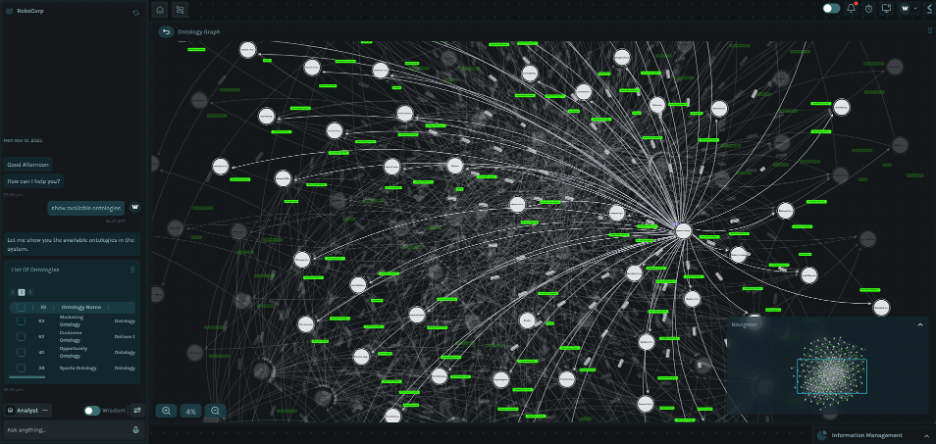
Graph Architecture
┌─────────────────────────────────────────────────────────────────────┐
│                    KNOWLEDGE GRAPH ARCHITECTURE                     │
├─────────────────────────────────────────────────────────────────────┤
│                                                                     │
│  ┌─────────────────────────────────────────────────────────────┐    │
│  │                    ENTITY RESOLUTION ENGINE                 │    │
│  │  ┌─────────────┐  ┌─────────────┐  ┌─────────────┐          │    │
│  │  │  Matching   │  │  Merging    │  │  Linking    │          │    │
│  │  │  Service    │  │  Service    │  │  Service    │          │    │
│  │  └─────────────┘  └─────────────┘  └─────────────┘          │    │
│  └─────────────────────────────────────────────────────────────┘    │
│                              │                                      │
│  ┌─────────────────────────────────────────────────────────────┐    │
│  │                    GRAPH STORAGE LAYER                      │    │
│  │  ┌─────────────┐  ┌─────────────┐  ┌─────────────┐          │    │
│  │  │  Entities   │  │Relationships│  │  Properties │          │    │
│  │  │  (Nodes)    │  │   (Edges)   │  │   (Attrs)   │          │    │
│  │  └─────────────┘  └─────────────┘  └─────────────┘          │    │
│  └─────────────────────────────────────────────────────────────┘    │
│                              │                                      │
│  ┌─────────────────────────────────────────────────────────────┐    │
│  │                    QUERY & TRAVERSAL                        │    │
│  │  • Graph Queries   • Path Finding   • Pattern Matching      │    │
│  │  • Aggregations    • Subgraph Extraction   • Analytics      │    │
│  └─────────────────────────────────────────────────────────────┘    │
└─────────────────────────────────────────────────────────────────────┘
Entity Types
| Entity Type |
Description |
Key Attributes |
| Person |
Individual entities |
Name variants, identifiers, demographics |
| Organization |
Corporate entities |
Legal name, registration, jurisdiction |
| Matter |
Legal engagements |
Matter ID, type, status, dates |
| Document |
Legal documents |
Type, classification, retention |
| Address |
Physical/mailing addresses |
Components, geolocation, validation |
| Identifier |
External IDs |
Type, value, issuer, validity |
Relationship Types
| Relationship |
From |
To |
Properties |
| OWNS |
Person/Organization |
Organization |
Percentage, start/end dates |
| CONTROLS |
Person/Organization |
Organization |
Control type, effective date |
| RELATED_TO |
Person |
Person |
Relationship type |
| EMPLOYS |
Organization |
Person |
Role, department, dates |
| REPRESENTS |
Organization |
Person/Organization |
Matter reference |
| LOCATED_AT |
Person/Organization |
Address |
Address type, validity |
| HAS_IDENTIFIER |
Person/Organization |
Identifier |
Primary flag |
Entity Resolution
The Entity Resolution Engine identifies and links records that refer to the same real-world entity across multiple data sources.
Entity Resolution Architecture
┌─────────────────────────────────────────────────────────────────────┐
│                    ENTITY RESOLUTION PIPELINE                       │
├─────────────────────────────────────────────────────────────────────┤
│                                                                     │
│  Source Records ──▶ [Blocking] ──▶ [Matching] ──▶ [Clustering]      │
│        │                │              │               │            │
│        ▼                ▼              ▼               ▼            │
│  (Raw ingestion)   (Candidate     (Similarity      (Entity          │
│                     pairs)         scoring)        assignment)      │
│                                        │               │            │
│                                        ▼               ▼            │
│                              [Human Review] ──▶ [Golden Record]     │
│                                (Uncertain        (Merged entity)    │
│                                 matches)                |           │
│                                        │                │           │
│                                        ▼                ▼           │
│                              [Audit Trail] ◀────────────┘           │
└─────────────────────────────────────────────────────────────────────┘
Resolution Components
| Component |
Function |
Security Controls |
| Blocking |
Reduces comparison space |
Configurable rules, no false negatives |
| Matching |
Calculates similarity scores |
Deterministic + probabilistic methods |
| Clustering |
Groups related records |
Configurable thresholds |
| Golden Record |
Creates authoritative entity |
Merge rules, conflict resolution |
| Human Review |
Handles uncertain matches |
Role-based assignment, audit trail |
Matching Methods
| Method |
Use Case |
Accuracy |
| Exact Match |
Identifiers, codes |
100% (when available) |
| Fuzzy Name Match |
Person/organization names |
Configurable threshold |
| Phonetic Match |
Name variations, misspellings |
Soundex, Metaphone |
| Address Standardization |
Location matching |
USPS/Royal Mail standards |
| ML-Based Scoring |
Complex entity types |
Model-dependent |
External Source Integration
The Knowledge Fabric connects to external data sources for entity enrichment and verification.
External Source Architecture
┌─────────────────────────────────────────────────────────────────────┐
│                    EXTERNAL SOURCE INTEGRATION                      │
├─────────────────────────────────────────────────────────────────────┤
│                                                                     │
│  ┌─────────────────────────────────────────────────────────────┐    │
│  │                    SOURCE REGISTRY                          │    │
│  │  • Source Catalog   • Credential Store   • Rate Limits      │    │
│  └─────────────────────────────────────────────────────────────┘    │
│                              │                                      │
│         ┌────────────────────┼────────────────────┐                 │
│         ▼                    ▼                    ▼                 │
│  ┌─────────────┐      ┌─────────────┐      ┌─────────────┐          │
│  │  Corporate  │      │  Identity   │      │   OSINT     │          │
│  │  Registries │      │  Providers  │      │  Sources    │          │
│  └─────────────┘      └─────────────┘      └─────────────┘          │
│         │                    │                    │                 │
│         └────────────────────┼────────────────────┘                 │
│                              ▼                                      │
│  ┌─────────────────────────────────────────────────────────────┐    │
│  │                    ENRICHMENT ENGINE                        │    │
│  │  • Entity Matching   • Data Fusion   • Provenance Tracking  │    │
│  └─────────────────────────────────────────────────────────────┘    │
│                              │                                      │
│                              ▼                                      │
│  ┌─────────────────────────────────────────────────────────────┐    │
│  │                    KNOWLEDGE GRAPH                          │    │
│  └─────────────────────────────────────────────────────────────┘    │
└─────────────────────────────────────────────────────────────────────┘
External Source Categories
| Category |
Examples |
Data Types |
| Corporate Registries |
Companies House, SEC EDGAR |
Incorporation, officers, filings |
| Identity Verification |
ID document validation |
Identity confirmation |
| Beneficial Ownership |
PSC registers, UBO databases |
Ownership chains |
| Sanctions Lists |
OFAC, OFSI, UN, EU |
Designated persons/entities |
| PEP Databases |
Politically exposed persons |
Political associations |
| Adverse Media |
News aggregators, media monitors |
Negative news, allegations |
| Court Records |
Legal databases |
Litigation history |
| Credit Bureaus |
Business credit agencies |
Financial standing |
OSINT Integration Security
| Control |
Implementation |
| Source Validation |
Only approved sources in registry |
| Credential Isolation |
Per-source credential management |
| Rate Limiting |
Respect source API limits |
| Data Minimization |
Retrieve only required fields |
| Caching Policy |
Time-limited caching per source |
| Provenance Tracking |
Full lineage from source to graph |
| Schema Binding |
Extracted data aligned to user-controlled schemas |
OSINT extractors use schemas defined by the user to structure incoming data. This ensures external data conforms to the organization’s domain model.
| Capability |
Description |
| Schema Assignment |
Each extractor bound to target schema |
| Field Mapping |
External fields mapped to schema attributes |
| Type Conversion |
External data converted to schema types |
| Validation |
Extracted data validated against schema constraints |
| Default Values |
Missing fields populated with schema defaults |
For detailed schema management, see 09-Schema-Management.
Enrichment Workflow
| Stage |
Description |
Security Control |
| Request |
Entity submitted for enrichment |
Authorization check |
| Matching |
Entity matched against external source |
Matching rules applied |
| Retrieval |
Data fetched from external source |
Encrypted transport |
| Fusion |
External data merged with existing |
Conflict resolution rules |
| Validation |
Enriched data validated |
Schema validation |
| Storage |
Enriched entity persisted |
Access control inherited |
| Audit |
Enrichment event logged |
Full audit trail |
External Source Monitoring
| Metric |
Description |
Alert Threshold |
| Source Availability |
External source uptime |
< 99% over 24h |
| Response Latency |
External source response time |
> 5 seconds |
| Match Rate |
Successful entity matches |
< 70% (source-dependent) |
| Error Rate |
Failed enrichment requests |
> 5% |
| Credential Expiry |
Days until credential expires |
< 30 days |
Customer System Connections
The Knowledge Fabric maintains live connections to customer source systems, keeping the graph synchronized with operational data.
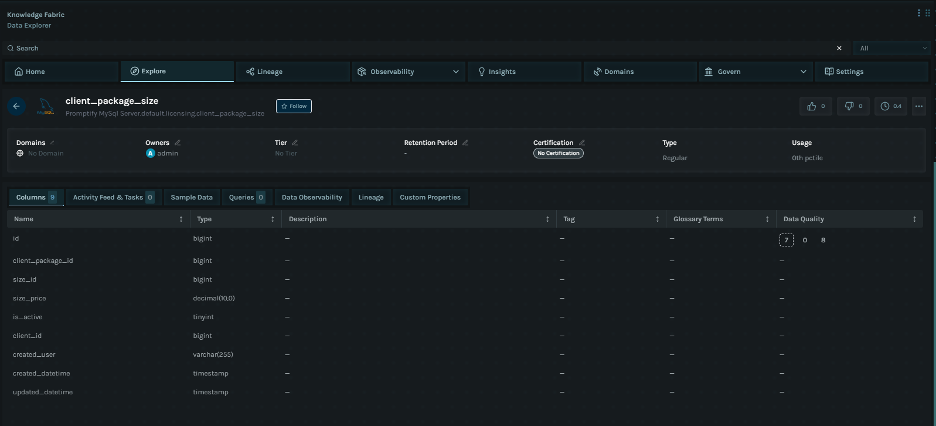
Connection Architecture
┌─────────────────────────────────────────────────────────────────────┐
│                    CUSTOMER SYSTEM CONNECTIONS                      │
├─────────────────────────────────────────────────────────────────────┤
│                                                                     │
│                    ┌─────────────────────┐                          │
│                    │   KNOWLEDGE GRAPH   │                          │
│                    └─────────┬───────────┘                          │
│                              │                                      │
│              ┌───────────────┼───────────────┐                      │
│              ▼               ▼               ▼                      │
│  ┌───────────────────┐ ┌──────────────┐ ┌───────────────────┐       │
│  │  SYNC MANAGER     │ │ CHANGE DATA  │ │  MCP GATEWAY      │       │
│  │  (Batch/Schedule) │ │ CAPTURE      │ │  (Real-time)      │       │
│  └─────────┬─────────┘ └──────┬───────┘ └─────────┬─────────┘       │
│            │                  │                   │                 │
│            └──────────────────┼───────────────────┘                 │
│                               │                                     │
│  ┌─────────────────────────────────────────────────────────────┐    │
│  │                    CONNECTOR LAYER                          │    │
│  │  ┌─────────┐ ┌─────────┐ ┌─────────┐ ┌─────────┐ ┌───────┐  │    │
│  │  │  CRM    │ │ Practice│ │ Document│ │ Finance │ │ Custom│  │    │
│  │  │ Systems │ │ Mgmt    │ │  Mgmt   │ │ Systems │ │  APIs │  │    │
│  │  └─────────┘ └─────────┘ └─────────┘ └─────────┘ └───────┘  │    │
│  └─────────────────────────────────────────────────────────────┘    │
│                               │                                     │
│  ┌─────────────────────────────────────────────────────────────┐    │
│  │                    CUSTOMER SYSTEMS                         │    │
│  │  Matter Mgmt │ CRM │ Billing │ Document Mgmt │ HR Systems   │    │
│  └─────────────────────────────────────────────────────────────┘    │
└─────────────────────────────────────────────────────────────────────┘
Customer System Types
| System Type |
Integration Method |
Data Extracted |
| Practice Management |
API, database |
Matters, clients, contacts |
| CRM Systems |
API |
Relationships, interactions |
| Document Management |
API |
Document metadata, classifications |
| Billing Systems |
API, database |
Financial relationships |
| Email Archives |
API |
Communication metadata |
Connection Security Controls
| Control |
Implementation |
| Credential Vault |
All connection credentials encrypted at rest |
| Connection Encryption |
TLS 1.2+ required for all connections |
| IP Allowlisting |
Customer can restrict to LegalFab IPs |
| Read-Only Access |
Metadata extraction uses read-only credentials |
| Query Auditing |
All queries to source systems logged |
| Data Sampling |
Only statistical samples, no bulk data |
Data Synchronization Security
| Control |
Description |
| Conflict Resolution |
Configurable rules for conflicting updates |
| Tombstone Handling |
Deleted records tracked, not purged |
| Version Tracking |
All entity versions preserved |
| Sync Validation |
Checksums verify data integrity |
| Rollback Support |
Sync batches can be reversed |
Data Flow
The Knowledge Fabric enables access and source systems while maintaining data governance and audit requirements.
Data Flow Architecture
┌─────────────────────────────────────────────────────────────────────┐
│                    DATA FLOW                                        │
├─────────────────────────────────────────────────────────────────────┤
│                                                                     │
│                    ┌─────────────────────┐                          │
│                    │   KNOWLEDGE FABRIC  │                          │
│                    │                     │                          │
│                    └─────────┬───────────┘                          │
│                              │                                      │
│                    ┌─────────┴───────────┐                          │
│                    │   MCP CONNECTORS    │                          │
│                    │                     │                          │
│                    └─────────┬───────────┘                          │
│                              │                                      │
│         ┌────────────────────┼────────────────────┐                 │
│         │                    │                    │                 │
│         ▼                    ▼                    ▼                 │
│  ┌─────────────┐      ┌─────────────┐      ┌─────────────┐          │
│  │  ─────────  │      │  ─────────  │      │  ─────────  │          │
│  │   CRM       │      │  Document   │      │   Data      │          │
│  │             │      │  Mgmt       │      │   Lake      │          │
│  │  ─────────  │      │             │      │             │          │
│  └─────────────┘      └─────────────┘      └─────────────┘          │
│                                                                     │
└─────────────────────────────────────────────────────────────────────┘
Read Operations (Data Access)
| Operation |
Description |
| Cross-Source Query |
Query across multiple sources simultaneously |
| Entity Retrieval |
Retrieve entity information from authoritative systems |
| Document Access |
Access documents and case files where they’re stored |
| Relationship Queries |
Pull relationship data from existing graph databases |
| Real-Time Access |
Direct data access without ETL or replication |
Multi-System Coordination
When an entity exists in multiple systems:
| Control |
Description |
| Primary Source Definition |
Define authoritative source for each entity type |
| Multi-Write Option |
Optionally write to multiple systems |
| Master Record Designation |
Designate which system holds master record |
| Conflict Resolution |
Handle when same entity has different values across sources |
| Cascade Control |
Control whether updates cascade to related records |
What Knowledge Fabric Stores vs. What Remains in Source Systems
Stored in Knowledge Fabric:
| Data Type |
Purpose |
| Entity Resolution Mappings |
Person A in CRM = Person A in case management |
| Cross-System Relationships |
Person connected to organization across databases |
| Investigation Annotations |
Tags, notes, and classifications |
| Derived Insights |
Agent conclusions and analysis results |
| Temporal Snapshots |
Point-in-time views for investigation history |
Remains in Source Systems:
| Data Type |
Location |
| Actual Records |
Names, addresses, phone numbers in CRM/source |
| Document Files |
Case files and evidence in document management |
| Transaction Records |
Financial data in source systems |
| Communication Logs |
Emails, messages in their native systems |
| Operational Data |
All authoritative business data |
This architecture ensures you get a unified investigative view without moving or duplicating operational data. Updates to source systems are reflected immediately in the Knowledge Fabric view.
Customer System Health Monitoring
| Health Check |
Description |
Frequency |
| Connectivity |
Source system reachable |
5 minutes |
| Authentication |
Credentials valid |
Hourly |
| Data Freshness |
Last successful sync |
Continuous |
| Schema Drift |
Source schema changes |
Daily |
| Performance |
Sync latency and throughput |
Per sync |
Connectivity
The Connectivity layer provides secure access to heterogeneous data sources through multiple connection patterns.
Connection Types
| Type |
Description |
Security Controls |
| Direct Database |
JDBC/ODBC connections to relational databases |
Encrypted connections, credential vault |
| API Connections |
REST/GraphQL/SOAP integrations |
OAuth/API key auth, TLS transport |
| MCP Connectors |
Model Context Protocol for AI integration |
Schema validation, permission scoping |
| Event Streams |
Kafka, message queue integrations |
mTLS, message encryption |
| File Systems |
Cloud storage, network shares |
Access tokens, encryption |
Database Connectivity Security
| Control |
Implementation |
| Connection Encryption |
TLS 1.2+ required for all database connections |
| Connection Pooling |
Managed pools with configurable limits |
| Query Timeout |
Maximum query execution time enforced |
| Read-Only Mode |
Optional read-only connections for metadata extraction |
| IP Allowlisting |
Source system can restrict to LegalFab IPs |
API Connectivity Security
| Authentication Method |
Use Case |
Security Properties |
| OAuth 2.0 |
Modern APIs, cloud services |
Token-based, scoped, refreshable |
| API Keys |
Simple integrations |
Rotatable, rate-limited |
| mTLS |
High-security endpoints |
Certificate-based mutual auth |
| Basic Auth (over TLS) |
Legacy systems |
Encrypted transport required |
MCP Connector Security
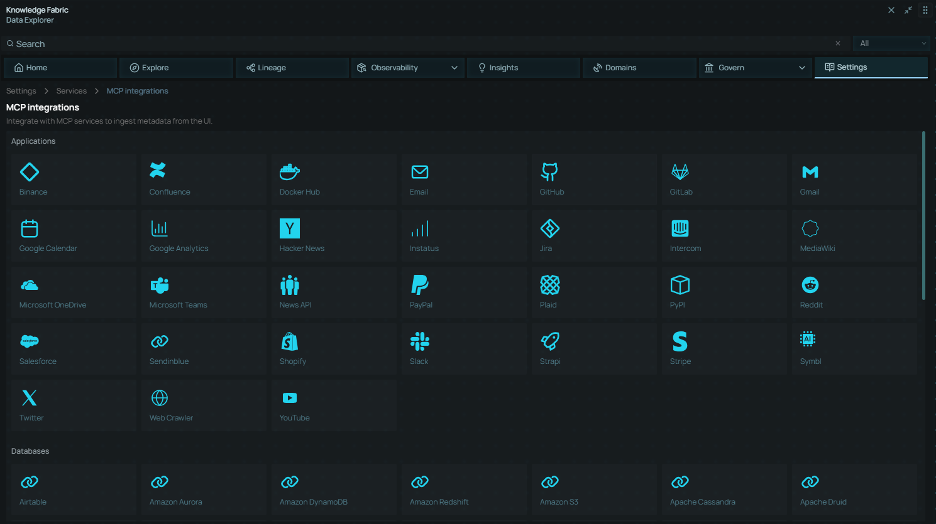
The Knowledge Fabric can both consume and generate MCP (Model Context Protocol) connectors. With 200+ data source connectors available, the platform enables federated queries across diverse systems.
MCP Connector Catalog:
| Category |
Examples |
| Databases |
PostgreSQL, MySQL, MongoDB, Neo4j, Snowflake, BigQuery, ClickHouse, Oracle, SQL Server |
| SaaS Applications |
Salesforce, HubSpot, Slack, Gmail, Google Drive, Jira, GitHub, Airtable, Notion |
| Cloud Storage |
AWS S3, Azure Blob, Google Cloud Storage, Dropbox, OneDrive |
| Document Management |
SharePoint, iManage, NetDocuments, Box |
| Legal Systems |
Aderant, Elite, Clio, PracticePanther |
| AI/ML |
OpenAI, Anthropic Claude, ChromaDB, LanceDB |
MCP Connector Configuration:
| Configuration |
Description |
| OAuth2 Flow |
Secure authentication for SaaS connectors |
| API Key/Connection String |
Database and API authentication |
| Sync Frequency |
Hourly, daily, weekly, or on-demand sync |
| Enable/Disable |
Toggle connectors without deletion |
| Custom Filters |
Include/exclude rules for data indexing |
MCP Schema Integration:
MCP connectors utilize user-defined schemas to ensure extracted data aligns with the organization’s domain model.
| Capability |
Description |
| Schema Provision |
Schema provided to MCP tool for data extraction |
| Response Mapping |
Tool response mapped to schema structure |
| Contract Enforcement |
Tool outputs validated against expected schema |
| Type Safety |
Strong typing prevents data inconsistencies |
For detailed schema management, see 09-Schema-Management.
Source System Connectivity Patterns
| Pattern |
Description |
Use Case |
| Direct TLS |
Encrypted connection over internet |
Cloud-hosted sources |
| VPN Tunnel |
Site-to-site encrypted tunnel |
On-premises sources |
| Private Link |
Cloud provider private connectivity |
Same-cloud sources |
| Agent-Based |
Customer-deployed agent connects outbound |
Air-gapped environments |
MCP Integration Lifecycle Management
LegalFab maintains MCP connectors through proactive monitoring, continuous health tracking, and defined remediation processes to ensure service continuity as third-party platforms evolve.
Proactive API Change Tracking:
| Activity |
Frequency |
Description |
| Release Monitoring |
Continuous |
Track vendor release notes, changelogs, deprecation announcements |
| Breaking Change Alerts |
As announced |
Flag planned breaking changes for connected platforms |
| Compatibility Review |
Per vendor release cycle |
Scheduled testing against new API versions |
| Pre-Release Testing |
Where available |
Validation against vendor sandbox/beta environments |
Continuous Integration Monitoring:
| Capability |
Description |
| Real-Time Health Checks |
Automated status monitoring for all active MCP connections |
| Schema Drift Detection |
Identify API response changes and data structure modifications |
| Authentication Monitoring |
Track token expiry, credential validity, OAuth refresh status |
| Back-Office Dashboard |
Centralized connector status with per-integration health indicators |
| Configurable Alerting |
Thresholds adjustable per integration criticality |
Error Reporting & Analytics:
| Metric |
Description |
| Error Rate by MCP Type |
Aggregated error rates per connector category |
| Error Rate by Time Period |
Trend analysis (hourly, daily, weekly, monthly) |
| Error Classification |
Root cause categorization (vendor change, auth expiry, rate limit, network, schema drift) |
| Degradation Detection |
Trend analysis to identify issues before complete failure |
| Customer Reports |
Integration health reports available on request |
Remediation Process:
| Responsibility |
Owner |
Description |
| Issue Detection |
LegalFab |
Automated monitoring identifies connector issues |
| Root Cause Analysis |
LegalFab |
Determine if vendor change, configuration, or platform issue |
| Connector Updates |
LegalFab |
Code updates, compatibility fixes, regression testing |
| Customer Notification |
LegalFab |
Proactive communication of detected issues and remediation timeline |
Remediation SLAs:
| Severity |
Definition |
Response Time |
| Critical |
Complete connector failure, data flow stopped |
24 hours |
| High |
Significant degradation, partial functionality |
72 hours |
| Medium |
Minor issues, workaround available |
7 days |
| Low |
Cosmetic or optimization improvements |
Next release cycle |
Service Continuity Assurance:
| Capability |
Description |
| Graceful Degradation |
Clear user messaging when connector unavailable |
| Retry Logic |
Exponential backoff for transient failures |
| Fallback Caching |
Cached data for read operations during outages |
| Status Transparency |
Real-time connector status visible to administrators |
Discovery Service
The Discovery Service automatically identifies and catalogs data assets across connected sources.
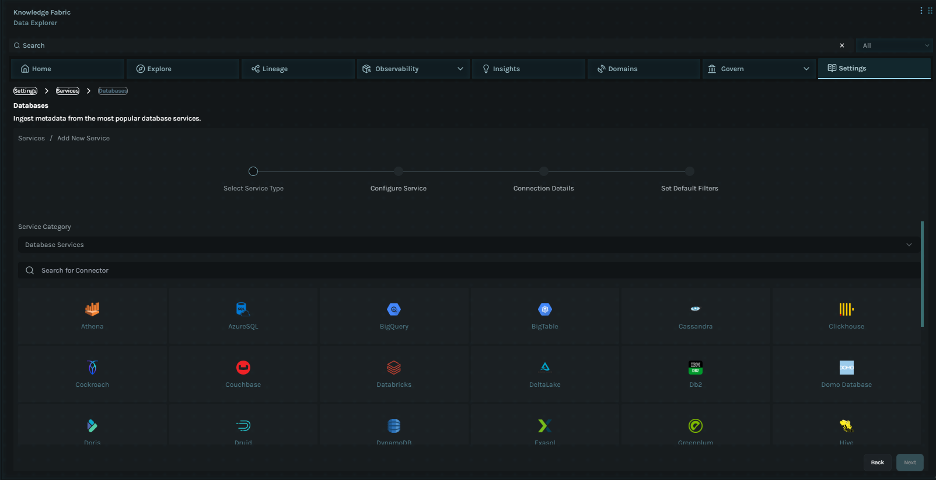
Discovery Components
| Component |
Function |
Security Controls |
| Crawler Engine |
Traverses source structures |
Depth limits, exclusion patterns |
| Schema Extractor |
Extracts table/column metadata |
Read-only access, no data retrieval |
| Profiler |
Computes statistical profiles |
Sampling limits, aggregation only |
| Classifier |
Identifies sensitive data patterns |
ML-based PII/sensitive detection |
Discovery Security Controls
| Control |
Implementation |
| Scan Scheduling |
Configurable scan windows to minimize source impact |
| Rate Limiting |
Throttled requests to prevent source overload |
| Sampling Limits |
Maximum sample size for profiling (configurable) |
| Exclusion Rules |
Ability to exclude specific schemas/tables |
| Metadata Only |
No bulk data extraction; metadata and statistics only |
Discovery Scope Management
| Scope Setting |
Description |
Default |
| Schema Filter |
Include/exclude specific schemas |
All accessible |
| Table Filter |
Include/exclude specific tables |
All accessible |
| Column Sampling |
Enable/disable column profiling |
Enabled |
| Sample Size |
Maximum rows for statistical profiling |
10,000 |
| Scan Depth |
Maximum relationship traversal depth |
3 levels |
Discovery Audit Trail
| Event |
Logged Data |
Retention |
| Scan Initiated |
Source, initiator, scope configuration |
1 year |
| Asset Discovered |
Asset type, location, classification |
1 year |
| Schema Change Detected |
Old/new schema, change type |
2 years |
| Scan Completed |
Duration, assets discovered, errors |
1 year |
| Scan Failed |
Error details, partial results |
1 year |
The Active Metadata system provides continuous metadata analysis, enrichment, and intelligence.
| Capability |
Description |
| Change Detection |
Monitors schema and data changes |
| Auto-Classification |
ML-based sensitive data detection |
| Relationship Discovery |
Identifies entity relationships |
| Quality Monitoring |
Continuous data quality assessment |
| Usage Analytics |
Tracks metadata access patterns |
Automated Classification
Classification Categories:
| Category |
Patterns Detected |
Handling |
| PII |
Names, addresses, SSN, phone, email |
Restricted access, masking |
| Legal Privileged |
Matter IDs, attorney-client markers |
Highly restricted |
| Financial |
Account numbers, billing data |
Confidential, encryption |
| Health |
Medical records, diagnoses |
Restricted, HIPAA controls |
| Custom |
Organization-defined patterns |
Configurable handling |
Classification Security:
| Control |
Implementation |
| ML Model Security |
Models trained on synthetic data only |
| Classification Audit |
All classification decisions logged |
| Override Controls |
Manual classification with approval workflow |
| Propagation |
Classifications propagate through lineage |
Lineage Tracking
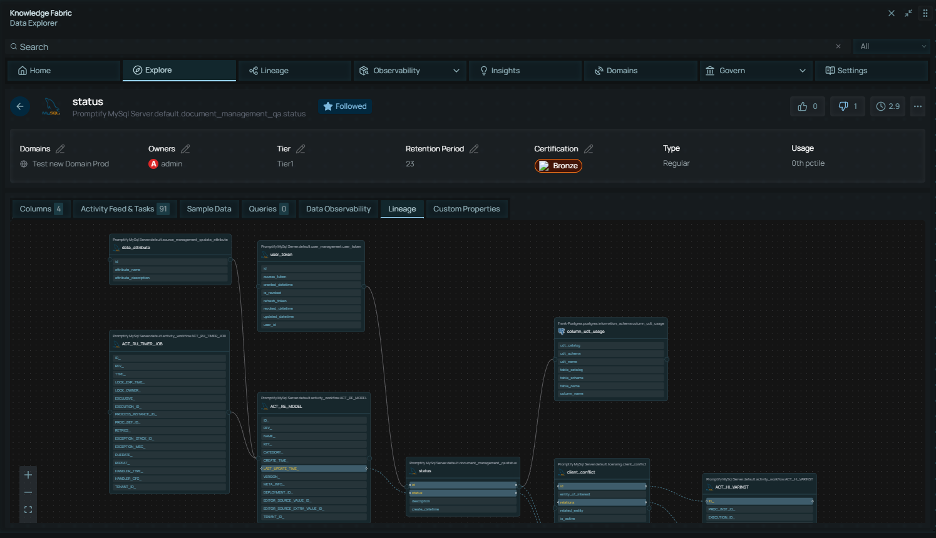
| Lineage Type |
Description |
Security Use |
| Technical Lineage |
Data flow through systems |
Impact analysis |
| Business Lineage |
Business process relationships |
Compliance mapping |
| Column Lineage |
Field-level transformations |
Sensitive data tracking |
| Operational Lineage |
Runtime execution paths |
Audit trail |
Lineage Security Controls:
| Control |
Description |
| Access Inheritance |
Downstream inherits upstream restrictions |
| Impact Analysis |
Identify affected assets on changes |
| Compliance Evidence |
Lineage serves as audit evidence |
Persistent Knowledge Graph
The Persistent Knowledge Graph (PKG) serves as “corporate memory,” storing all information extracted from connected sources according to defined schemas. Unlike transient query results, the PKG maintains a durable, indexed knowledge base that accumulates insights over time.
Knowledge Tree Structure
The PKG organizes knowledge in a hierarchical structure that enables both detailed and global context retrieval:
| Level |
Content |
Purpose |
| Level 1 |
Attributes |
Entity property information (names, dates, values) |
| Level 2 |
Relations |
Entity-entity relationship triples |
| Level 3 |
Keywords |
Semantic keyword indexing for search |
| Level 4 |
Communities |
Hierarchical clustering for global context |
Entity extraction is constrained through seed schemas that define targeted extraction:
| Schema Component |
Description |
Example |
| Entity Types (E_types) |
Allowed entity categories |
Person, Organization, Contract |
| Relation Types (R_types) |
Allowed relationship types |
OWNS, REPRESENTS, SIGNED |
| Attribute Types (A_types) |
Allowed entity attributes |
Name, Date, Amount, Jurisdiction |
Benefits of Schema-Bounded Extraction:
| Benefit |
Description |
| Hallucination Prevention |
System cannot invent entities outside schema |
| Focused Extraction |
Only relevant information captured |
| Consistency |
Uniform entity structure across sources |
| Validation |
All extractions validated against schema |
Source Provenance Model
Each entity and relationship maintains complete provenance linking back to source documents:
| Provenance Element |
Description |
| Connector ID |
Source system connector reference |
| Document Reference |
Document ID, title, and URL |
| Precise Location |
Page, paragraph, character offset, or cell range |
| Extracted Text |
Exact text from which entity was derived |
| Confidence Score |
Extraction confidence level (0-1) |
| Extraction Timestamp |
When the extraction occurred |
Incremental Updates
| Capability |
Description |
| Change Detection |
Detect modified documents on each sync |
| Differential Processing |
Only process changed content |
| Entity Merging |
Merge updated information with existing entities |
| Conflict Resolution |
Handle conflicting information with rules |
| Version Tracking |
Maintain history of entity changes |
Search Sessions
Search Sessions provide an interactive exploration context where users ask questions and accumulate discoveries across multiple query turns.
Session Architecture
┌─────────────────────────────────────────────────────────────────────────┐
│                       SEARCH SESSION MODEL                               │
├─────────────────────────────────────────────────────────────────────────┤
│                                                                         │
│  ┌───────────────────┐     ┌───────────────────────────────────────┐    │
│  │   Project         │────▶│     Persistent Knowledge Graph        │    │
│  │   Configuration   │     │     (Corporate Memory)                │    │
│  └───────────────────┘     └───────────────────────────────────────┘    │
│           │                              │                              │
│           ▼                              ▼                              │
│  ┌───────────────────┐     ┌───────────────────────────────────────┐    │
│  │   Search Session  │────▶│     Session Graph                     │    │
│  │   (User Context)  │     │     (Accumulated Discoveries)         │    │
│  └───────────────────┘     └───────────────────────────────────────┘    │
│           │                              │                              │
│           ▼                              ▼                              │
│  ┌───────────────────┐     ┌───────────────────────────────────────┐    │
│  │   Query Turns     │────▶│     Results with Provenance           │    │
│  │   (NL Queries)    │     │     (Sources, Reasoning Chain)        │    │
│  └───────────────────┘     └───────────────────────────────────────┘    │
│                                                                         │
└─────────────────────────────────────────────────────────────────────────┘
Session Graph Accumulation
The Session Graph builds cumulatively across queries, providing context-aware exploration:
| Feature |
Description |
| Cumulative Discovery |
Entities discovered in earlier queries available in later ones |
| Context Preservation |
Session maintains full context of exploration path |
| Relationship Building |
New queries can reference previously discovered entities |
| History Tracking |
All queries and findings preserved in session history |
Query Turn Processing
| Stage |
Description |
Security Control |
| Query Input |
Accept natural language query |
Input sanitization |
| Context Assembly |
Combine session context with PKG |
Permission filtering |
| Reasoning Chain |
Generate step-by-step reasoning |
Audit logging |
| Subgraph Retrieval |
Extract relevant portion of PKG |
Access control enforcement |
| Source Display |
Show document references |
Provenance verification |
| Session Update |
Add discoveries to session graph |
Session isolation |
Data Observability
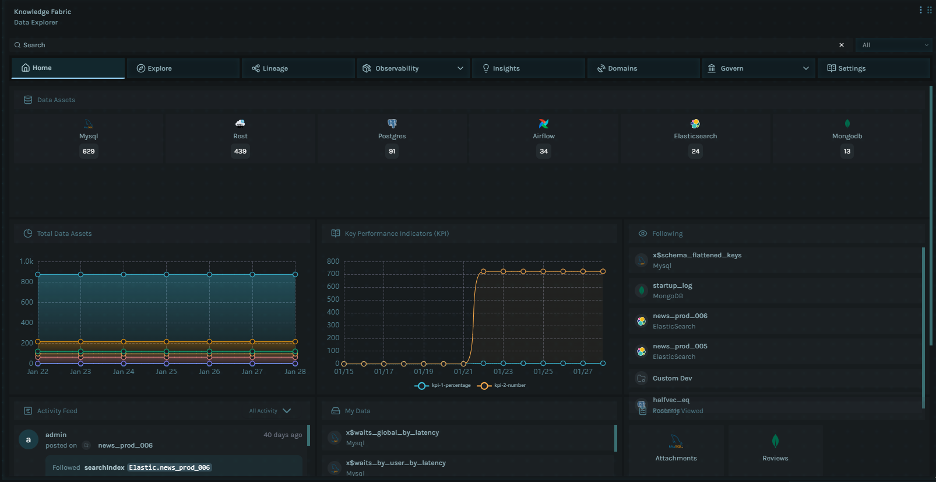
The Knowledge Fabric integrates data observability capabilities to monitor data health, quality, and pipeline performance.
Observability Integration
| Capability |
Description |
Purpose |
| Test Outcomes in Lineage |
Quality test results displayed on lineage |
Identify issues in data flow |
| Freshness Monitoring |
Track data currency and staleness |
Ensure data timeliness |
| Quality Alerts |
Automated notifications on test failures |
Proactive issue detection |
| Pipeline Health |
Monitor extraction and sync pipelines |
Operational visibility |
Data Quality Metrics
| Metric |
Description |
Tracking |
| Completeness |
Percentage of non-null values |
Per-field, per-source |
| Uniqueness |
Duplicate detection rate |
Per-entity type |
| Validity |
Conformance to schema constraints |
Per-field validation |
| Consistency |
Cross-source agreement |
Entity resolution metrics |
| Timeliness |
Data freshness indicators |
Last sync, staleness alerts |
Quality Test Integration
| Test Type |
Description |
| Schema Tests |
Validate data structure conformance |
| Relationship Tests |
Verify relationship integrity |
| Business Rule Tests |
Apply domain-specific validation |
| Anomaly Detection |
Statistical outlier identification |
| Freshness Tests |
Data currency validation |
Observability Alerts
| Alert Type |
Trigger |
Response |
| Quality Failure |
Test fails below threshold |
Notification to data owners |
| Pipeline Error |
Sync or extraction failure |
Operations alert |
| Freshness Warning |
Data exceeds staleness threshold |
Reprocess or escalate |
| Drift Detection |
Schema or pattern changes |
Review and validate |
Data Insights and KPIs
The Knowledge Fabric provides analytics and reporting to track data governance health.
| KPI |
Description |
Target |
| Documentation Coverage |
Percentage of entities with descriptions |
80%+ |
| Ownership Assignment |
Percentage of assets with owners |
95%+ |
| Classification Coverage |
Percentage of fields classified |
90%+ |
| Lineage Completeness |
Percentage of assets with full lineage |
85%+ |
| Data Quality Score |
Aggregate quality across sources |
90%+ |
| Report |
Description |
| Asset Inventory |
Total entities, relationships, sources |
| Usage Patterns |
Most accessed entities and queries |
| Quality Trends |
Quality metrics over time |
| Governance Compliance |
Policy adherence and exceptions |
| Discovery Activity |
New entities and relationships found |
Graph Database Security
Query Security
| Control |
Description |
| Input Validation |
Query parameters validated and sanitized |
| Injection Prevention |
Parameterized queries, no string concatenation |
| Rate Limiting |
Per-user query rate limits |
| Resource Limits |
Query timeout and memory limits |
Monitoring
The Monitoring system provides comprehensive observability across the Knowledge Fabric.
Health Monitoring
| Component |
Health Checks |
Frequency |
| API Services |
Endpoint availability, response time |
30 seconds |
| Database |
Connection pool, query latency |
1 minute |
| Connectors |
Source connectivity status |
5 minutes |
| Background Jobs |
Job completion, queue depth |
1 minute |
| Metric |
Description |
Alert Threshold |
| API Latency (P95) |
95th percentile response time |
> 2 seconds |
| Query Latency |
Graph query execution time |
> 5 seconds |
| Discovery Duration |
Time to complete scan |
> configured window |
| Error Rate |
Failed requests percentage |
> 1% |
Security Monitoring
| Monitor |
Detection |
Response |
| Authentication Failures |
Multiple failed login attempts |
Account lockout, alert |
| Anomalous Access |
Unusual data access patterns |
Alert, investigation |
| Credential Usage |
Unexpected credential access |
Alert, audit review |
| Configuration Changes |
Security setting modifications |
Audit, approval verification |
Security Alert Categories:
| Category |
Examples |
Response SLA |
| Critical |
Breach indicators, data exfiltration |
15 minutes |
| High |
Multiple auth failures, privilege escalation |
1 hour |
| Medium |
Policy violations, configuration drift |
4 hours |
| Low |
Certificate expiration, best practice deviation |
24 hours |
SIEM Integration
| Integration Method |
Format |
Use Case |
| Syslog |
CEF, RFC 5424 |
Traditional SIEM |
| Webhook |
JSON |
Cloud-native SIEM |
| API Pull |
REST/JSON |
Custom integration |
| Event Stream |
Kafka |
High-volume environments |
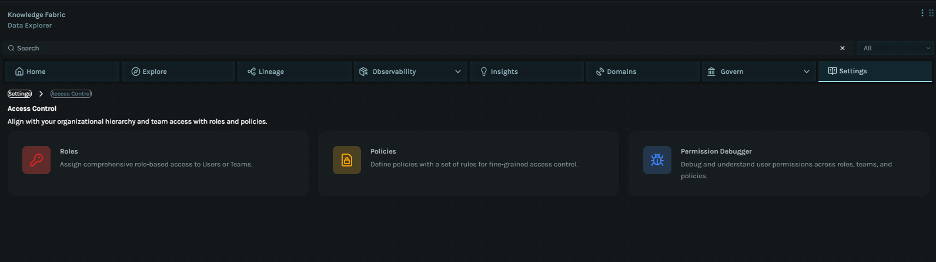
Authentication and Access Control
Authentication Mechanisms
| Method |
Use Case |
Security Properties |
| OAuth 2.0 + OIDC |
User authentication |
Federated identity, token-based |
| API Keys |
Machine-to-machine communication |
Scoped permissions, rotatable |
| Mutual TLS (mTLS) |
Service-to-service authentication |
Certificate-based verification |
| SAML 2.0 |
Enterprise SSO integration |
Federated identity |
Session Management
| Parameter |
Value |
Rationale |
| Access Token Lifetime |
15 minutes |
Limits exposure window |
| Refresh Token Lifetime |
8 hours |
Balances security with usability |
| Idle Timeout |
30 minutes |
Prevents abandoned session exploitation |
| Absolute Timeout |
24 hours |
Forces re-authentication |
Authorization Model
Role-Based Access Control (RBAC):
| Role |
Permissions |
Typical Assignment |
| Viewer |
Read catalog, search, view lineage |
Business analysts |
| Contributor |
Viewer + add descriptions, tags |
Data stewards |
| Editor |
Contributor + modify classifications |
Data engineers |
| Admin |
Full access including governance policies |
Platform administrators |
| Auditor |
Read-only access to all data including audit logs |
Compliance officers |
Credential Management
Source System Credentials
| Control |
Description |
| Encrypted Storage |
AES-256 with HSM-backed key management |
| Just-in-Time Access |
Credentials retrieved only at connection time |
| Scoped Retrieval |
Only authorized connectors access specific credentials |
| Audit Trail |
All credential access logged with requester identity |
| Separation of Duties |
Different roles for creation, modification, and usage |
Supported Credential Types
| Type |
Storage Method |
Rotation Support |
| Username/Password |
Encrypted vault |
Manual or automated |
| API Keys |
Encrypted vault |
Automated |
| OAuth Tokens |
Encrypted vault with refresh |
Automatic refresh |
| Certificates |
Certificate store |
Automated with CA integration |
Data Protection
Data Classification Framework
| Level |
Description |
Handling Requirements |
| Public |
Non-sensitive data |
Standard controls |
| Internal |
Business confidential |
Authentication required |
| Confidential |
Sensitive business data |
Encryption, access logging |
| Restricted |
PII, privileged legal data |
Enhanced encryption, masking |
| Highly Restricted |
Credentials, privileged matter data |
HSM encryption, privileged access |
Data Masking
| Technique |
Use Case |
| Full Masking |
Highly sensitive fields |
| Partial Masking |
Identification fields |
| Format Preserving |
Testing scenarios |
| Tokenization |
Cross-system correlation |
Audit Logging
Logged Events
| Event Category |
Logged Data |
Retention |
| Authentication |
User ID, timestamp, IP, result |
1 year |
| Authorization |
Subject, resource, action, decision |
1 year |
| Data Access |
User ID, asset ID, fields accessed |
1 year |
| Configuration Changes |
Setting, old/new value, changed by |
2 years |
| Credential Access |
Credential ID, accessor, purpose |
2 years |
| Discovery Events |
Scan scope, results, errors |
1 year |
| Connectivity Events |
Connection attempts, status, duration |
1 year |
| Entity Resolution |
Match decisions, merge events, source attribution |
2 years |
| External Enrichment |
Source queried, entity enriched, data fused |
1 year |
Log Security
| Control |
Implementation |
| Integrity |
Cryptographic hash chain prevents tampering |
| Confidentiality |
Logs encrypted at rest |
| Access Control |
Auditor role required; no delete capability |
| Retention |
Configurable per regulation (default 1 year) |