LegalFab AML Compliance
Version: 1.0
Last Updated: January 2026
Component Overview
The AML (Anti-Money Laundering) Compliance module provides comprehensive capabilities for customer due diligence, risk assessment, and regulatory compliance. It leverages the Knowledge Fabric’s graph-based entity resolution and the Studio’s workflow capabilities to deliver an integrated compliance solution.
Core Capabilities:
| Capability |
Description |
Security Relevance |
| Knowledge Graph Integration |
Entity resolution and relationship mapping |
Data integrity, access control |
| Rule Engine |
Risk scoring and compliance decision rules |
Rule versioning, audit trail |
| BPM Workflows |
CDD and investigation process orchestration |
Process authorization, escalation |
| External Enrichment |
OSINT and third-party data integration |
Source validation, provenance |
| Screening |
Sanctions, PEP, and adverse media checks |
Match verification, false positive handling |
| Case Management |
Compliance case tracking and documentation |
Evidence chain, retention |
Architecture Overview
┌─────────────────────────────────────────────────────────────────────────┐
│                        AML COMPLIANCE ARCHITECTURE                      │
├─────────────────────────────────────────────────────────────────────────┤
│                                                                         │
│  ┌────────────────────────────────────────────────────────────────────┐ │
│  │                    COMPLIANCE INTERFACE                            │ │
│  │  ┌──────────────┐  ┌──────────────┐  ┌──────────────────────────┐  │ │
│  │  │  Case Queue  │  │  Dashboards  │  │  Reporting & Analytics   │  │ │
│  │  └──────────────┘  └──────────────┘  └──────────────────────────┘  │ │
│  └────────────────────────────────────────────────────────────────────┘ │
│                              │                                          │
│  ┌────────────────────────────────────────────────────────────────────┐ │
│  │                    COMPLIANCE ENGINE                               │ │
│  │  ┌─────────────┐  ┌─────────────┐  ┌─────────────┐  ┌───────────┐  │ │
│  │  │  Rule       │  │  BPM        │  │  Screening  │  │   Case    │  │ │
│  │  │  Engine     │  │  Workflows  │  │  Service    │  │  Manager  │  │ │
│  │  └─────────────┘  └─────────────┘  └─────────────┘  └───────────┘  │ │
│  └────────────────────────────────────────────────────────────────────┘ │
│                              │                                          │
│  ┌────────────────────────────────────────────────────────────────────┐ │
│  │                    KNOWLEDGE FABRIC INTEGRATION                    │ │
│  │  ┌─────────────────┐  ┌─────────────────┐  ┌────────────────────┐  │ │
│  │  │ Knowledge Graph │  │ Entity          │  │ External Source    │  │ │
│  │  │ (Entities &     │  │ Resolution      │  │ Integration        │  │ │
│  │  │  Relationships) │  │                 │  │ (OSINT)            │  │ │
│  │  └─────────────────┘  └─────────────────┘  └────────────────────┘  │ │
│  └────────────────────────────────────────────────────────────────────┘ │
│                              │                                          │
│  ┌────────────────────────────────────────────────────────────────────┐ │
│  │                    CUSTOMER SYSTEM CONNECTIONS                     │ │
│  │  Matter Management │ CRM │ Billing │ Document Management           │ │
│  └────────────────────────────────────────────────────────────────────┘ │
└─────────────────────────────────────────────────────────────────────────┘
Knowledge Graph for AML
The Knowledge Fabric’s graph database provides the foundation for AML compliance, enabling entity resolution, relationship mapping, and risk analysis across connected data sources.
AML Entity Model
| Entity Type |
Description |
AML Relevance |
| Person |
Individual clients, contacts, UBOs |
KYC subject, risk assessment |
| Organization |
Corporate clients, related entities |
Corporate structure, ownership |
| Compliance Case |
CDD/EDD investigation record |
Case management, audit trail |
| Risk Assessment |
Calculated risk profile |
Risk scoring, CDD level |
| Screening Result |
Sanctions/PEP/adverse media matches |
Alert management |
| Document |
Evidence and supporting documents |
Compliance documentation |
AML Relationship Types
| Relationship |
Description |
Compliance Use |
| OWNS |
Ownership stake in entity |
UBO identification |
| CONTROLS |
Control relationship |
Beneficial ownership |
| RELATED_TO |
Personal/business relationship |
Network analysis |
| HAS_CASE |
Entity linked to compliance case |
Case tracking |
| HAS_SCREENING |
Entity linked to screening result |
Alert management |
| HAS_RISK_ASSESSMENT |
Entity linked to risk profile |
Risk monitoring |
Entity Resolution for AML
The Entity Resolution Engine identifies duplicate and related records across customer systems to build a unified view of each entity.
Resolution Security Controls:
| Control |
Implementation |
| Match Decision Audit |
All match decisions logged with reasoning |
| Human Review Queue |
Uncertain matches routed for manual review |
| Source Attribution |
Every attribute linked to source system |
| Confidence Scoring |
Match confidence visible for compliance review |
| Merge History |
Complete history of entity merges preserved |
Graph Queries for Compliance
| Query Type |
Purpose |
Security Control |
| Ownership Traversal |
Identify UBOs through ownership chains |
Traversal depth limits |
| Network Analysis |
Map entity relationships |
Result filtering by permission |
| Pattern Matching |
Detect suspicious relationship patterns |
Query audit logging |
| Risk Aggregation |
Calculate network-level risk |
Authorized users only |
Rule Engine
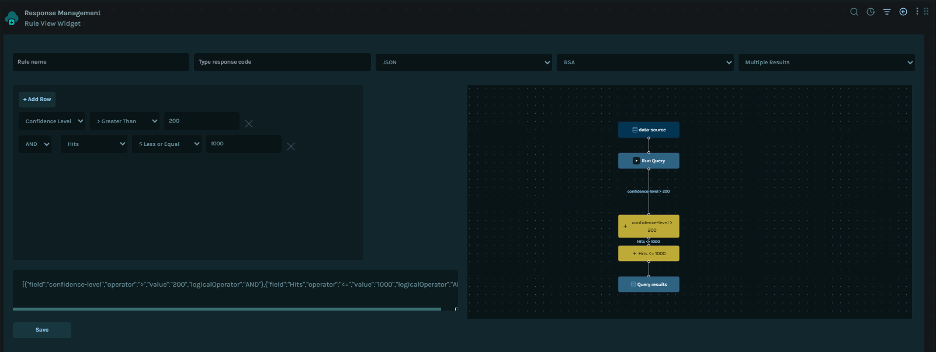 The Rule Engine enables administrators to define, version, and execute business rules for risk assessment, compliance decisions, and workflow routing.
Rule Engine Architecture
┌─────────────────────────────────────────────────────────────────────┐
│                    RULE ENGINE ARCHITECTURE                         │
├─────────────────────────────────────────────────────────────────────┤
│                                                                     │
│  ┌──────────────────────────────────────────────────────────--──┐   │
│  │                    RULE DEFINITION LAYER                     │   │
│  │  ┌─────────────┐  ┌─────────────┐  ┌─────────────┐           │   │
│  │  │  Rule       │  │  Condition  │  │  Action     │           │   │
│  │  │  Builder    │  │  Editor     │  │  Designer   │           │   │
│  │  └─────────────┘  └─────────────┘  └─────────────┘           │   │
│  └───────────────────────────────────────────────────────────-──┘   │
│                              │                                      │
│  ┌────────────────────────────────────────────────────────────-─┐   │
│  │                    RULE EXECUTION ENGINE                     │   │
│  │  ┌─────────────┐  ┌─────────────┐  ┌─────────────┐           │   │
│  │  │  Evaluation │  │  Scoring    │  │  Action     │           │   │
│  │  │  Engine     │  │  Engine     │  │  Executor   │           │   │
│  │  └─────────────┘  └─────────────┘  └─────────────┘           │   │
│  └────────────────────────────────────────────────────────────-─┘   │
│                              │                                      │
│  ┌─────────────────────────────────────────────────────────────-┐   │
│  │                    GOVERNANCE LAYER                          │   │
│  │  • Version Control   • Approval Workflow   • Audit Trail     │   │
│  └────────────────────────────────────────────────────────────-─┘   │
└─────────────────────────────────────────────────────────────────────┘
Rule Types
| Rule Type |
Purpose |
Example Use Case |
| Risk Scoring |
Calculate numeric risk scores |
Customer risk assessment |
| Classification |
Assign categories based on conditions |
CDD level determination |
| Threshold |
Trigger actions when values exceed limits |
Alert generation |
| Routing |
Direct workflow based on conditions |
Escalation to MLRO |
| Validation |
Verify data meets requirements |
Input data validation |
Rule Definition Security
| Control |
Implementation |
| Role-Based Editing |
Only authorized roles can create/modify rules |
| Version Control |
All rule changes versioned with full history |
| Approval Workflow |
Rule changes require approval before activation |
| Testing Required |
Rules must pass test suite before deployment |
| Rollback Support |
Previous versions can be restored instantly |
Risk Scoring Rules
Risk scoring rules calculate numeric scores based on configurable factors and weights.
Scoring Components:
| Component |
Description |
Security Control |
| Factor Definition |
Risk factors with categories and weights |
Admin-only modification |
| Score Calculation |
Weighted aggregation of factors |
Audit trail on calculations |
| Threshold Mapping |
Score ranges mapped to risk levels |
Configurable per policy |
| Override Handling |
Manual score adjustments |
Requires justification, logged |
Risk Factor Categories:
| Category |
Examples |
Typical Weight Range |
| Geography |
Country risk, jurisdiction |
0-30 points |
| Industry |
Sector risk classification |
0-25 points |
| Product/Service |
Transaction type risk |
0-20 points |
| Customer Type |
Individual, corporate, trust |
0-15 points |
| Channel |
Online, in-person, referral |
0-10 points |
| Behavioral |
Transaction patterns, velocity |
0-20 points |
Risk Level Mapping:
| Risk Level |
Score Range |
CDD Level |
Review Frequency |
| Low |
0-25 |
Simplified |
36 months |
| Medium |
26-50 |
Standard |
24 months |
| High |
51-75 |
Enhanced |
12 months |
| Very High |
76-100 |
Enhanced+ |
6 months |
Rule Versioning
| Control |
Description |
| Immutable Versions |
Published versions cannot be modified |
| Version History |
Complete history of all changes preserved |
| Change Attribution |
Every change linked to user and timestamp |
| Comparison View |
Side-by-side comparison of versions |
| Audit Export |
Version history exportable for compliance |
Rule Execution Security
| Control |
Implementation |
| Execution Isolation |
Rules execute in sandboxed environment |
| Input Validation |
All inputs validated against schema |
| Output Verification |
Results validated before action execution |
| Timeout Enforcement |
Maximum execution time enforced |
| Resource Limits |
Memory and CPU limits on rule execution |
Rule Audit Trail
| Event |
Logged Data |
Retention |
| Rule Created |
Rule definition, creator, timestamp |
2 years |
| Rule Modified |
Changes, modifier, justification |
2 years |
| Rule Activated |
Version, approver, effective date |
2 years |
| Rule Executed |
Input hash, score, actions triggered |
1 year |
| Rule Overridden |
Override value, justification, approver |
2 years |
BPM Workflows
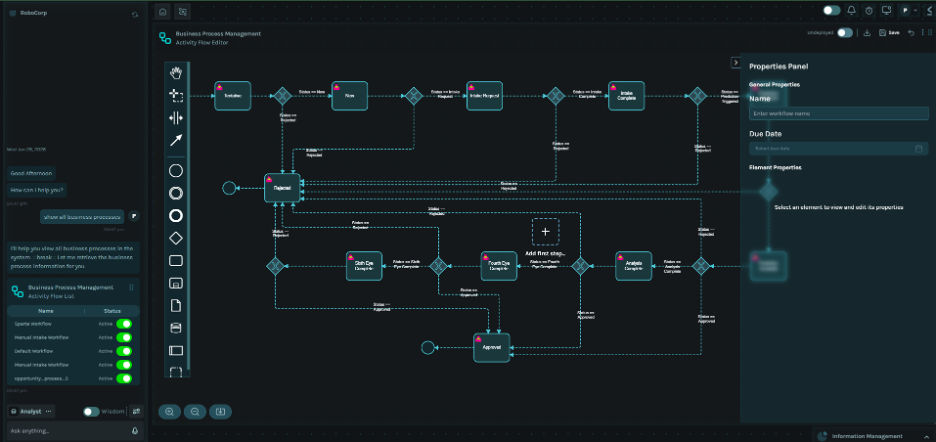
The BPM (Business Process Management) system orchestrates multi-step compliance processes with human tasks, automated actions, and regulatory controls.
BPM Architecture
┌─────────────────────────────────────────────────────────────────────┐
│                    BPM WORKFLOW ARCHITECTURE                        │
├─────────────────────────────────────────────────────────────────────┤
│                                                                     │
│  ┌────────────────────────────────────────────────────────-─────┐   │
│  │                    PROCESS DEFINITION                        │   │
│  │  ┌─────────────┐  ┌─────────────┐  ┌─────────────┐           │   │
│  │  │  Process    │  │  Task       │  │  Gateway    │           │   │
│  │  │  Designer   │  │  Library    │  │  Config     │           │   │
│  │  └─────────────┘  └─────────────┘  └─────────────┘           │   │
│  └────────────────────────────────────────────────────────────-─┘   │
│                              │                                      │
│  ┌───────────────────────────────────────────────────────────-──┐   │
│  │                    EXECUTION ENGINE                          │   │
│  │  ┌─────────────┐  ┌─────────────┐  ┌─────────────┐           │   │
│  │  │  Process    │  │  Task       │  │  Event      │           │   │
│  │  │  Runtime    │  │  Manager    │  │  Handler    │           │   │
│  │  └─────────────┘  └─────────────┘  └─────────────┘           │   │
│  └──────────────────────────────────────────────────────────-───┘   │
│                              │                                      │
│  ┌───────────────────────────────────────────────────────────-──┐   │
│  │                    INTEGRATION LAYER                         │   │
│  │  • Knowledge Graph   • Rule Engine   • Notification Service  │   │
│  └────────────────────────────────────────────────────────────-─┘   │
└─────────────────────────────────────────────────────────────────────┘
Compliance Process Types
| Process Type |
Purpose |
Trigger |
| Client Onboarding |
New client CDD workflow |
Entity creation from MMS |
| Periodic Review |
Scheduled re-assessment |
Timer, risk change |
| Triggered Review |
Event-driven re-assessment |
Alert, external event |
| Investigation |
Suspicious activity review |
Alert, manual referral |
| SAR Escalation |
MLRO review and filing |
Risk threshold, policy |
Risk-Based Workflow Triggering
The Rule Engine integrates with BPM to automatically trigger appropriate workflows based on risk assessment outcomes.
Workflow Trigger Flow:
┌─────────────────────────────────────────────────────────────────────┐
│                    RISK-BASED WORKFLOW TRIGGERING                   │
├─────────────────────────────────────────────────────────────────────┤
│                                                                     │
│  Entity Event ──▶ [Risk Assessment] ──▶ [Rule Evaluation]           │
│       │                  │                      │                   │
│       ▼                  ▼                      ▼                   │
│  (New client,      (Score calculated)     (Rules matched)           │
│   data change,                                  │                   │
│   alert)                                        ▼                   │
│                                     [Workflow Selection]            │
│                                           │                         │
│              ┌────────────────────────────┼────────────────┐        │
│              ▼                            ▼                ▼        │
│         [Low Risk]                  [Medium Risk]    [High Risk]    │
│              │                            │                │        │
│              ▼                            ▼                ▼        │
│       Simplified CDD              Standard CDD      Enhanced CDD    │
│        Workflow                    Workflow          Workflow       │
│              │                            │                │        │
│              └────────────────────────────┼────────────────┘        │
│                                           ▼                         │
│                                    [Task Assignment]                │
│                                           │                         │
│                                           ▼                         │
│                                    [Process Execution]              │
│                                           │                         │
│                                           ▼                         │
│                                     [Audit Trail]                   │
└─────────────────────────────────────────────────────────────────────┘
Workflow Task Types
| Task Type |
Description |
Security Control |
| User Task |
Human action required |
Role-based assignment |
| Service Task |
Automated system action |
Permission validation |
| Script Task |
Custom logic execution |
Sandboxed execution |
| Send Task |
External communication |
Message logging |
| Receive Task |
Wait for external event |
Event validation |
Workflow Security Controls
| Control |
Implementation |
| Process Authorization |
Only authorized users can start processes |
| Task Assignment |
Tasks assigned based on role and workload |
| Escalation Rules |
Automatic escalation on SLA breach |
| Delegation Controls |
Delegation requires approval, logged |
| Completion Verification |
Task completion validated before proceeding |
Workflow Definition Security
| Control |
Description |
| Version Control |
Process definitions versioned |
| Change Approval |
Process changes require multi-party approval |
| Testing Required |
Processes must pass simulation before deployment |
| Rollback Support |
Previous versions can be restored |
| Access Restrictions |
Process definition access role-based |
Task Assignment Security
| Control |
Implementation |
| Role-Based Assignment |
Tasks assigned to roles, not individuals |
| Workload Balancing |
Even distribution across team members |
| Conflict Avoidance |
Prevent assignment to conflicted parties |
| Audit Trail |
All assignments and reassignments logged |
| SLA Monitoring |
Task completion tracked against SLA |
Escalation Controls
| Trigger |
Action |
Security Control |
| SLA Breach |
Escalate to supervisor |
Automatic, logged |
| Risk Threshold |
Escalate to MLRO |
Rule-based, audited |
| Manual Request |
Escalate per request |
Requires justification |
| Timeout |
Reassign or escalate |
Configurable per task |
Process Instance Security
| Control |
Description |
| Instance Isolation |
Each process instance isolated |
| Data Encryption |
Process data encrypted at rest |
| Access Control |
Instance access based on role and assignment |
| State Protection |
State transitions validated and logged |
| Cancellation Control |
Cancellation requires authorization |
External Source Integration (OSINT)
The AML module integrates with external data sources for entity verification and enrichment.
External Source Categories
| Category |
Examples |
Data Types |
| Corporate Registries |
Companies House, SEC EDGAR |
Incorporation, officers, filings |
| Beneficial Ownership |
PSC registers, UBO databases |
Ownership chains |
| Sanctions Lists |
OFAC, OFSI, UN, EU |
Designated persons/entities |
| PEP Databases |
Politically exposed persons |
Political associations |
| Adverse Media |
News aggregators, media monitors |
Negative news, allegations |
| Court Records |
Legal databases |
Litigation history |
OSINT Integration Security
| Control |
Implementation |
| Source Validation |
Only approved sources in registry |
| Credential Isolation |
Per-source credential management |
| Rate Limiting |
Respect source API limits |
| Data Minimization |
Retrieve only required fields |
| Caching Policy |
Time-limited caching per source |
| Provenance Tracking |
Full lineage from source to graph |
Enrichment Workflow
| Stage |
Description |
Security Control |
| Request |
Entity submitted for enrichment |
Authorization check |
| Matching |
Entity matched against external source |
Matching rules applied |
| Retrieval |
Data fetched from external source |
Encrypted transport |
| Fusion |
External data merged with existing |
Conflict resolution rules |
| Validation |
Enriched data validated |
Schema validation |
| Storage |
Enriched entity persisted |
Access control inherited |
| Audit |
Enrichment event logged |
Full audit trail |
Screening Service
The Screening Service performs sanctions, PEP, and adverse media checks against entities.
Screening Types
| Screening Type |
Sources |
Frequency |
| Sanctions |
OFAC, OFSI, UN, EU lists |
Real-time, daily batch |
| PEP |
Political exposure databases |
On-boarding, periodic |
| Adverse Media |
News and media monitors |
Continuous monitoring |
Screening Security Controls
| Control |
Implementation |
| Match Verification |
Potential matches require human review |
| False Positive Management |
Documented false positive decisions |
| Alert Escalation |
True matches escalated per policy |
| Screening Audit |
All screening activity logged |
| List Update Tracking |
Source list versions tracked |
Compliance Case Management
Compliance cases track CDD, investigations, and regulatory actions.
Case Types
| Case Type |
Purpose |
Lifecycle |
| New Client CDD |
Onboarding due diligence |
Open → Review → Approved/Rejected |
| Periodic Review |
Scheduled re-assessment |
Triggered → Review → Closed |
| Investigation |
Alert or suspicion review |
Open → Investigate → Escalate/Close |
| SAR |
Suspicious activity report |
Prepare → Review → File/Dismiss |
Case Security Controls
| Control |
Implementation |
| Access Control |
Case access based on role and assignment |
| Evidence Chain |
All documents and notes timestamped |
| Decision Audit |
All decisions logged with justification |
| Retention Policy |
Cases retained per regulatory requirement |
| Export Controls |
Case export requires authorization |
User Roles and Permissions
AML-Specific Roles
| Role |
Description |
Permissions |
| Compliance Officer |
Day-to-day CDD work |
Case work, screening review, standard CDD |
| Compliance Manager |
Senior compliance staff |
Case approval, risk override, team management |
| MLRO |
Money Laundering Reporting Officer |
SAR filing, escalation approval, full case access |
| Intake Coordinator |
Intake staff |
Create cases, basic screening, escalate |
| Auditor |
External/internal auditor |
View all cases, run reports, no edit |
Permission Matrix
| Action |
Officer |
Manager |
MLRO |
Intake |
Auditor |
| Create Case |
✓ |
✓ |
✓ |
✓ |
✗ |
| Review Case |
✓ |
✓ |
✓ |
✗ |
✓ |
| Approve Case |
✗ |
✓ |
✓ |
✗ |
✗ |
| Override Risk |
✗ |
✓ |
✓ |
✗ |
✗ |
| File SAR |
✗ |
✗ |
✓ |
✗ |
✗ |
| Modify Rules |
✗ |
✓ |
✓ |
✗ |
✗ |
| View Reports |
✓ |
✓ |
✓ |
✗ |
✓ |
Audit Logging
AML-Specific Events
| Event Category |
Logged Data |
Retention |
| Case Created |
Case ID, entity, creator, type |
7 years |
| Case Decision |
Case ID, decision, approver, justification |
7 years |
| Risk Assessment |
Entity, score, factors, assessor |
7 years |
| Screening Performed |
Entity, sources, matches, reviewer |
7 years |
| Rule Executed |
Rule ID, inputs, score, actions |
7 years |
| Process Executed |
Process ID, tasks, outcomes |
7 years |
| SAR Filed |
Case ID, filer, filing reference |
7 years |
Regulatory Retention
| Regulation |
Retention Period |
Data Types |
| FCA Requirements |
5 years minimum |
CDD records, decisions |
| MLR 2017 |
5 years from end of relationship |
Identity documents, transaction records |
| Internal Policy |
7 years |
All compliance records |
Reporting and Analytics
Compliance Dashboards
| Dashboard |
Purpose |
Access |
| Case Queue |
Active cases and assignments |
All compliance roles |
| Risk Overview |
Entity risk distribution |
Manager, MLRO |
| SLA Monitoring |
Task completion against targets |
Manager, MLRO |
| Screening Alerts |
Pending screening matches |
Officer, Manager, MLRO |
| MI Dashboard |
Management information metrics |
Manager, MLRO |
Report Security
| Control |
Implementation |
| Role-Based Access |
Reports filtered by user permissions |
| Data Aggregation |
Individual data protected in summaries |
| Export Logging |
All report exports logged |
| Scheduled Reports |
Automated reports require authorization |